
Polycystic Ovarian Disease (PCOD / PCOS)
A common hormonal disorder in young women that affects ovulation, menstrual cycles, fertility and long-term health — manageable with timely diagnosis, lifestyle changes and medical care.
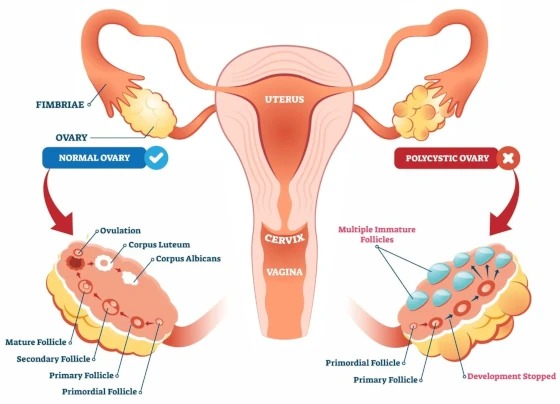
What is PCOD / PCOS?
A hormonal imbalance where ovaries become enlarged and develop multiple small cysts, often causing irregular periods and difficulty conceiving.
Girls usually begin to menstruate around the age of 12. During this time, the body releases hormones such as oestrogen and progesterone in a balanced manner. In some girls and women, this balance is disturbed and male-type hormones (androgens) increase, leading to irregular periods and the formation of multiple cysts in the ovaries. This condition is known as Polycystic Ovarian Disease (PCOD) or Polycystic Ovarian Syndrome (PCOS).
In PCOD, the ovaries are enlarged and contain many small fluid-filled sacs (cysts). These cysts contain immature eggs that do not get released on time. When eggs are not released regularly (anovulation), it becomes difficult to conceive naturally. PCOS is one of the most common causes of female infertility.
Women with PCOS also have an increased risk of complications in pregnancy such as high blood pressure, gestational diabetes and miscarriage. PCOS commonly affects women between 15 and 44 years of age, and many are unaware of the condition until they see a fertility specialist.
The exact cause of PCOS is not fully known, but genetics, insulin resistance and chronic low-grade inflammation are thought to play a role. Treatment usually combines lifestyle changes (diet, exercise, weight loss) with hormone therapy and fertility-focused treatments when needed.
How is PCOD Diagnosed?
Diagnosis is based on symptoms, examination, ultrasound and blood tests. Your doctor may:
- Discuss your menstrual history to check for irregular or missed periods.
- Look for signs of hirsutism (excess facial and body hair), acne or hair loss — indicators of high androgen levels.
- Perform a vaginal ultrasound to view enlarged ovaries and multiple small cysts.
- Order blood tests to check hormone levels, insulin, sugar and lipid profile.
What Causes PCOD / PCOS?
While the exact cause is unknown, several factors are commonly associated with PCOD/PCOS:
- Hereditary tendency (family history of PCOS or irregular periods)
- Family history of diabetes
- Anovulation: failure of the ovaries to regularly release eggs
- High androgen and oestrogen levels (hormonal imbalance)
- Obesity or excess weight
- Overactive adrenal glands
- Insulin resistance, leading to high insulin levels and further hormonal imbalance
How is PCOD Treated?
Treatment depends on the patient’s symptoms and goals — especially whether she is trying to conceive. At Maa Nursing Home and NetraJyoti Eyecare Centre, our gynaecology and infertility team provides a combination of lifestyle planning and medical/fertility treatments.
Lifestyle & Medical Management
- Weight loss: Even a 5–10% reduction in body weight can significantly improve ovulation, hormone balance and chances of pregnancy.
- Diet & exercise: A healthy, balanced diet with regular physical activity helps reduce insulin resistance and regulate periods.
- Anti-diabetic medicines: For women with insulin resistance or pre-diabetes, medicines may be prescribed to improve insulin sensitivity.
- Hormone therapy: Medicines to suppress excessive androgen and oestrogen levels, reduce cyst formation, improve egg quality and regulate hormonal balance.
- Cycle regulation: Medications to regularize menstrual cycles and reduce the risk of endometrial thickening.
Fertility-Focused Treatment
For women facing infertility due to PCOD, additional fertility treatments may be required:
- Ovulation induction with IUI (Intrauterine Insemination): Medicines stimulate egg development; timing is closely monitored. IUI is then performed to improve chances of conception. Careful dosing of HMG is used to reduce the risk of multiple pregnancy and ovarian hyperstimulation syndrome.
- Laparoscopic ovarian drilling: A minimally invasive procedure where multiple small holes are drilled in the thickened ovarian capsule to help restore ovulation in selected cases.
- IVF (In Vitro Fertilization): The best option for PCOD patients who do not conceive with medication and IUI. Eggs are collected, fertilised in the lab, and embryos are transferred back into the uterus.
With proper counselling, lifestyle changes and targeted fertility treatment, many women with PCOD are able to conceive and maintain a healthy pregnancy.
Why Choose Us for PCOD Care?
- Dedicated Gynaecology & Infertility Clinic
- Individualised lifestyle & treatment plans
- Expertise in PCOD-related infertility
- Comprehensive monitoring & counselling