
Hysteroscopy
A minimally invasive procedure that allows direct visualization and treatment of abnormalities inside the uterus.
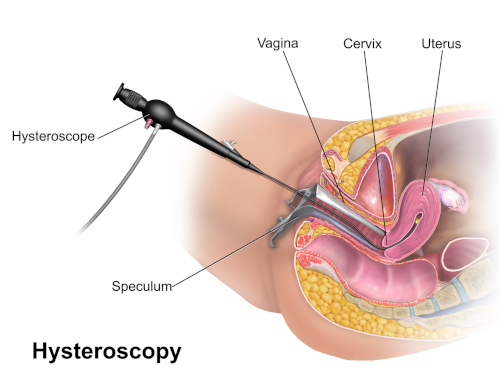
Overview & Clinical Approach
A thin telescope-like instrument is used to examine the cervix and uterus to diagnose and treat reproductive abnormalities.
Hysteroscopy is a short, minimally invasive procedure used when a woman experiences heavy bleeding, painful periods, infertility, or recurrent miscarriages. A hysteroscope (a thin fibre-optic telescope) is inserted through the vagina to directly visualize the uterine cavity.
It is used for both diagnosis and treatment, often helping identify and correct fibroids, endometrial polyps, intrauterine scar tissue (adhesions), uterine septum, tubal block at the utero-tubal junction, and lesions interfering with IVF implantation.
Diagnostic hysteroscopy usually takes about 30 minutes under local anaesthesia. If abnormalities are found, they can be removed in the same sitting (operative hysteroscopy), which may require general anaesthesia.
When performed by trained specialists, hysteroscopy is very safe.
Common Symptoms
- Heavy bleeding or painful menstrual periods
- Unexplained infertility or repeated IVF implantation failures
- Recurrent miscarriages
- Abnormal uterine bleeding outside menstruation
Primary Causes & Risk Factors
- Endometrial polyps, submucosal fibroids, or uterine septum
- Intrauterine adhesions (Asherman’s syndrome) or cornual tubal blockage
- Endometritis or adenomyosis affecting the uterine cavity
Diagnostic Procedures
- Diagnostic hysteroscopy directly visualizing the cervical canal and uterine cavity
- Pre-IVF cavity evaluation and histopathological assessment of uterine lining
Treatment Steps
Diagnostic Hysteroscopy
30-minute evaluation using a thin fibre-optic telescope under local anaesthesia.
Operative Hysteroscopy
Same-sitting surgical removal of polyps, fibroids, or scar tissue under direct vision.
Hysteroscopic Tubal Cannulation
Guidewire insertion to clear mucus plugs and restore tubal patency in cornual blocks.
Risks of Hysteroscopy
- Infection
- Uterine perforation
- Vaginal bleeding
- Fluid overload (very rare)
Key Treatment Benefits
- Direct visualization of the uterine cavity without external abdominal incisions
- Significantly improves IVF implantation rates and resolves recurrent miscarriages
Consultation for Hysteroscopy
Fill out the details below. Our care team will call to confirm your preferred OPD slot.